Agent Artificial Intelligence - A Practical Guide To Building AI Agents


Agent Artificial Intelligence: A Practical Guide to Building AI Agents for Real-World Systems
Introduction: Why Agent Artificial Intelligence Is Becoming the New Enterprise Standard
For years, enterprises invested heavily in automation systems that followed static logic. Rules engines. Decision trees. Predefined workflows. These systems delivered short-term efficiency but failed under real-world variability. Customer conversations changed. Languages shifted. Context disappeared between steps. Human intervention became unavoidable.
This is where Agent Artificial Intelligence enters the picture.
Agent Artificial Intelligence represents a shift from passive automation to active, goal-oriented systems that can reason, decide, and act autonomously across tools, data, and conversations. Unlike traditional bots or AI copilots, AI agents operate with intent, memory, and execution authority.
Across Japanese enterprises, this shift is becoming increasingly relevant. Large organizations demand systems that are precise, reliable, multilingual, compliant, and capable of operating at scale without constant human supervision. Agent Artificial Intelligence addresses these demands directly.
This guide breaks down Agent Artificial Intelligence in practical terms. No hype. No theory overload. Only what matters when building AI agents that actually work in production.
What Is Agent Artificial Intelligence?
Agent Artificial Intelligence refers to autonomous AI systems designed to pursue objectives, make decisions, and execute actions across multiple steps and systems without continuous human input.
An AI agent is not a chatbot. It is not a script. It is not a one-off model call.
An AI agent is a system composed of reasoning logic, memory, tools, and execution pathways that together enable autonomous behavior.
At a functional level, Agent Artificial Intelligence includes:
- Goal awareness
- Context retention across interactions
- Tool usage such as APIs, databases, and workflows
- Decision-making based on outcomes
- Feedback loops and self-correction
This architecture allows AI agents to operate in environments where uncertainty, language variation, and complex workflows are the norm.
Why Traditional Automation and Copilots Are No Longer Enough
Most enterprises already use some form of automation. However, these systems face structural limitations.
Rule-based systems break when inputs change. Copilots assist humans but cannot operate independently. Chatbots answer questions but do not complete tasks end to end.
Agent Artificial Intelligence fills this gap by enabling end-to-end ownership of outcomes.
For example, instead of assisting an agent during a customer call, an AI agent can:
- Understand the user intent
- Retrieve relevant data
- Trigger backend workflows
- Validate outcomes
- Close the task autonomously or escalate with full context
This transition is critical for organizations operating at high volumes, across languages, and under regulatory constraints.
Core Components of Agent Artificial Intelligence
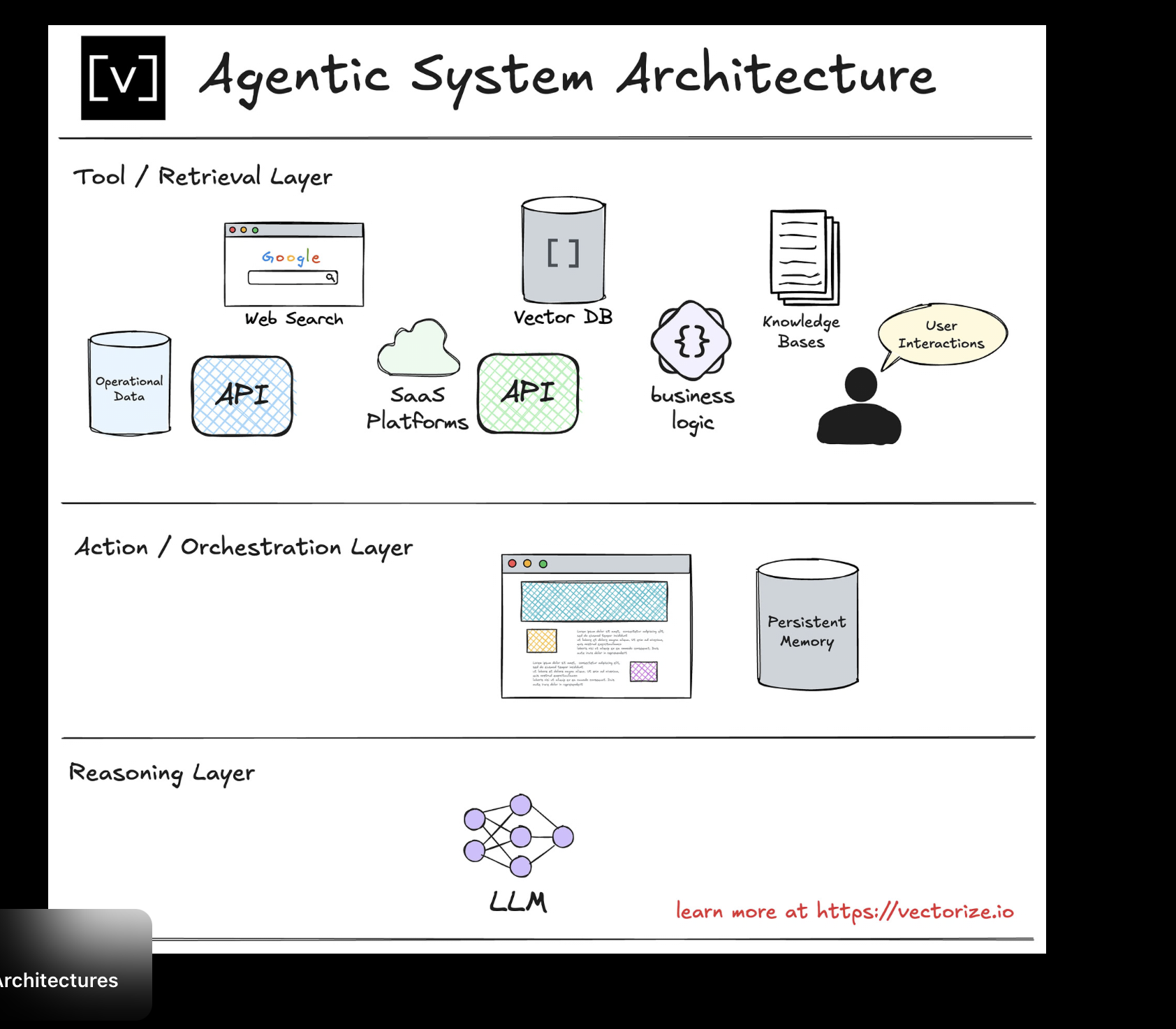
Building reliable AI agents requires more than connecting a large language model to an API. Effective Agent Artificial Intelligence systems are layered architectures.
1. Reasoning Engine
The reasoning layer determines how decisions are made. This includes intent recognition, prioritization, and planning.
Advanced agent systems rely on structured prompts, constrained reasoning paths, and domain-specific optimization rather than open-ended generation.
2. Memory and Context
Agents must retain context across turns, sessions, and channels. Memory can be short-term, long-term, or task-specific.
Without memory, agents repeat mistakes. With memory, they improve.
3. Tool and Workflow Orchestration
AI agents must interact with real systems. CRMs. Payment gateways. Ticketing platforms. Internal databases.
This requires secure, auditable, and deterministic orchestration layers.
4. Execution and Validation
Agents must not only act but verify outcomes. Was the task completed. Did the API succeed. Was the customer satisfied.
Execution without validation leads to silent failures.
Agent Artificial Intelligence in Multilingual and Voice-First Environments
One of the most underestimated challenges in AI agent deployment is language.
In markets like Japan, linguistic precision, tone, and contextual nuance are non-negotiable. Generic language models struggle with domain-specific vocabulary, speech variability, and cultural expectations.
Agent Artificial Intelligence systems designed for production environments often incorporate:
- Speech-to-speech processing
- Domain-specific language models
- Localized intent recognition
- Real-time correction and disambiguation
When agents operate directly on voice rather than translated text, latency drops and accuracy improves. This architecture becomes especially valuable in customer support, financial services, and public sector use cases.
Practical Use Cases of Agent Artificial Intelligence in Enterprises
Customer Support Automation
AI agents can handle entire customer journeys rather than individual queries. From authentication to resolution, agents maintain continuity.
Sales and Lead Qualification
Agents engage prospects, ask qualifying questions, update CRMs, and schedule follow-ups without manual intervention.
Operations and Internal Workflows
Agents automate repetitive internal tasks such as approvals, data reconciliation, and reporting.
Compliance and Quality Assurance
AI agents monitor interactions in real time, flag risks, and enforce compliance automatically.
How to Build AI Agents Step by Step
This section focuses on how to build, not conceptual discussion.
Step 1: Define the Outcome, Not the Conversation
Agent Artificial Intelligence should be designed around outcomes. Resolution. Conversion. Compliance. Not chat quality.
Step 2: Break the Task into Atomic Actions
Each agent action should be discrete and testable. Retrieve data. Validate input. Trigger workflow.
Step 3: Choose the Right Model Architecture
Large language models are not always the best choice. In many enterprise scenarios, smaller domain-trained models outperform general models in reliability and cost.
Step 4: Implement Guardrails
Agents must operate within defined boundaries. Tool access, fallback logic, and escalation paths are essential.
Step 5: Test in Production-Like Conditions
Agents trained in clean environments fail in noisy ones. Test with real data, real accents, and real variability.
The Hidden Differentiator: Infrastructure Matters More Than Models
Many AI agent initiatives fail not because of poor models, but because of weak infrastructure.
Latency, orchestration reliability, observability, and deployment control determine success.
Platforms that emphasize full-stack control rather than isolated model performance tend to scale more reliably in enterprise environments.
This is particularly relevant in regulated industries and high-volume deployments where consistency matters more than novelty.
Explore Practical AI Agents Built for Production
At this stage, most organizations understand the potential of Agent Artificial Intelligence. The challenge lies in execution.
If you are evaluating how AI agents could fit into your existing workflows, platforms that prioritize orchestration, multilingual capability, and real-world deployment constraints offer a more sustainable path forward.
Common Mistakes When Building Agent Artificial Intelligence
Over-reliance on Prompt Engineering
Prompts are not systems. Without orchestration, prompts collapse under scale.
Ignoring Edge Cases
Real users do not follow scripts. Agents must handle ambiguity gracefully.
Treating AI Agents as Chatbots
Chatbots respond. Agents act. Designing them the same way leads to failure.
Measuring Success in Agent Artificial Intelligence Deployments
Metrics should align with outcomes.
- Task completion rate
- Escalation accuracy
- Latency and responsiveness
- Cost per resolved interaction
- Compliance adherence
Enterprises that treat AI agents as operational units rather than experimental tools achieve faster ROI.
The Future of Agent Artificial Intelligence
Agent Artificial Intelligence is moving toward:
- Multi-agent collaboration
- Continuous learning within constraints
- Deeper integration with enterprise systems
- Voice-native and multimodal interaction
Organizations that invest early in robust agent architectures will be better positioned to adapt as these systems evolve.
Final Thoughts
Agent Artificial Intelligence is not a trend. It is a structural shift in how work gets done.
The difference between successful and failed deployments rarely lies in model choice alone. It lies in architecture, discipline, and respect for real-world complexity.
For enterprises seeking dependable automation rather than experimental demos, agent-first thinking is becoming a necessity.
Take the Next Step Toward Agentic Systems
If your organization is exploring AI agents beyond surface-level automation, the next step is understanding how these systems operate in real environments, not just theory.